Let's Know About Jomblang Cave
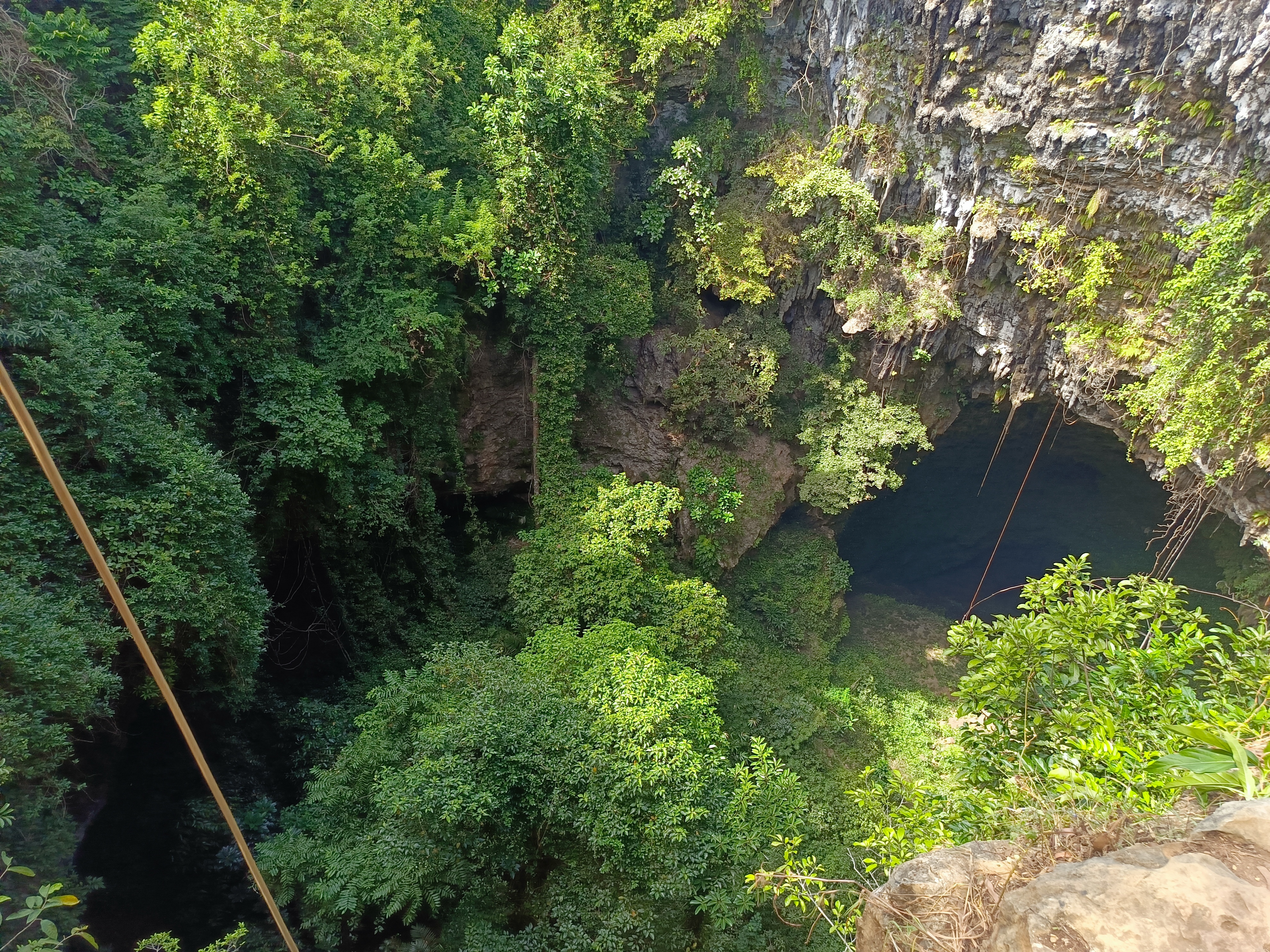
Goa Jomblang or luweng jomblang is located in the Pacarejo, Semanu, Gunungkidul. Towards this place takes about 2 hours from Yogyakarta city or about 30 minutes from Wonosari city. It is a vertical cave formed by geological process of land subsidence along with the vegetation that is to the bottom of the earth thousands years ago . This collapse formed a sinkhole or sumuran on Java language with the term luweng..
The Formation Process of Jomblang Cave
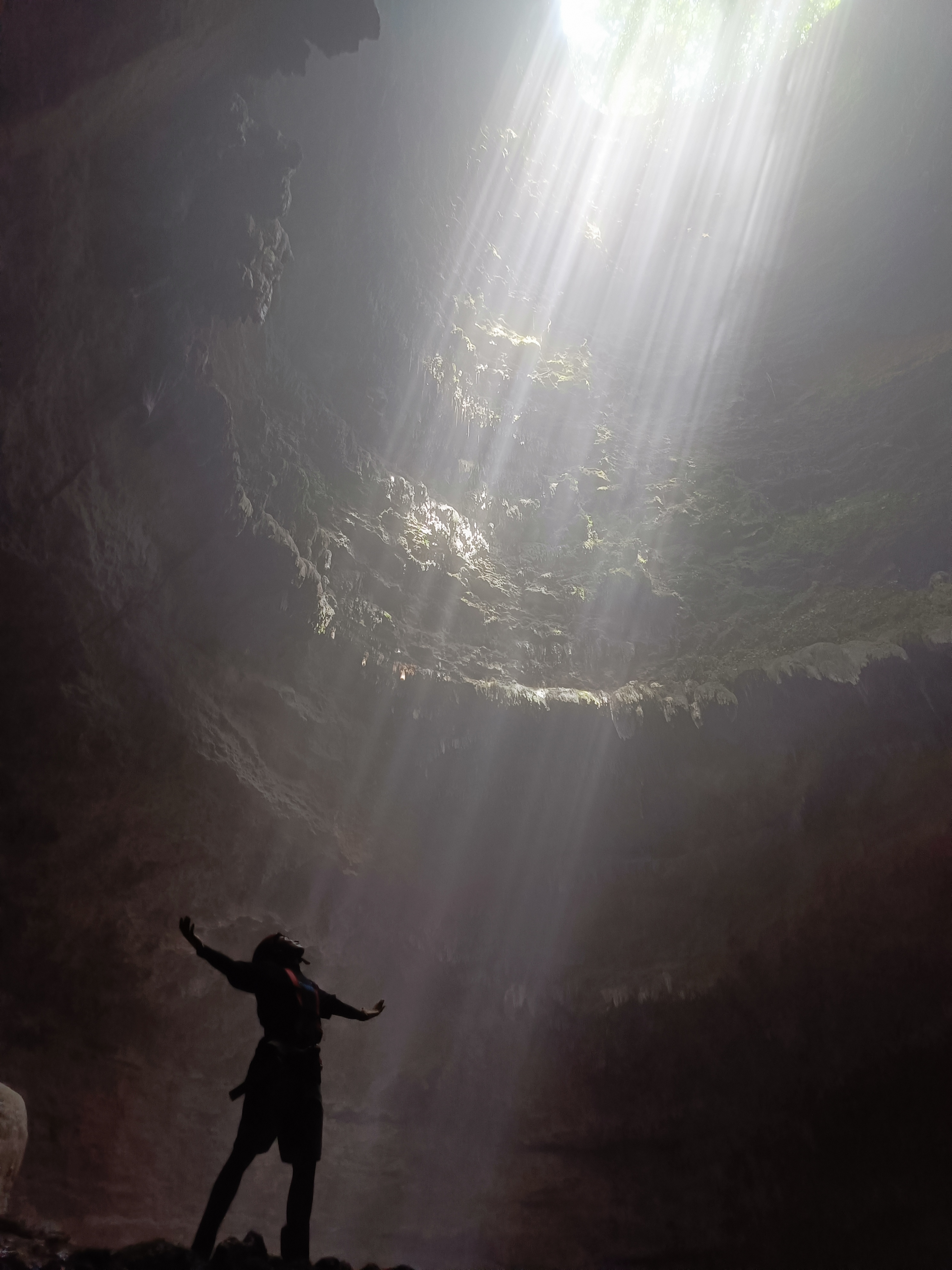
Unlike the area around the cave is fairly arid, while in this cave is very fertile. Another uniqueness in this cave is the base of the vertical cave there are ancient forests that grow a lot of plants that are not found outside the cave and the mouth of this horizontal cave about 50 meters in diameter. Jomblang vertical cave depth varied, ranging from 80 meters (line A), 60 meters (line B), 40 meters (line C), the traveler can choose the path that will be passed in accordance with your courage, for beginners usually use the VIP ( line C – 40 meters).
End of Jomblang cave is Grubug cave wells as deep as 90m, is the deepest wells in the island of Java. The phenomenon of the underground river at the base of luweng grubug and upward sights are very amazing. Two large Stalagmites with brown colour stand tall in the center of Goa Grubuk. The sunlight will penetrate through the mouth of the cave at 1:00 pm, like a divine light ( cahaya ilahi ) emitted beautifully and make this stalagmite glitter.
It is a 60 meters deep single-shaft with a diameter of 50 meters formed by dissolution and collapse of 1520 million years old limestone. The word goa means cave while the word Jomblang in Bahasa Jawa means mucikari or pimp. Related to the story from the villagers, it has no relation the word pimp to the name of the cave. So, it could be said that the word jomblang is a coinage.
Rock Types Composing Jomblang Cave
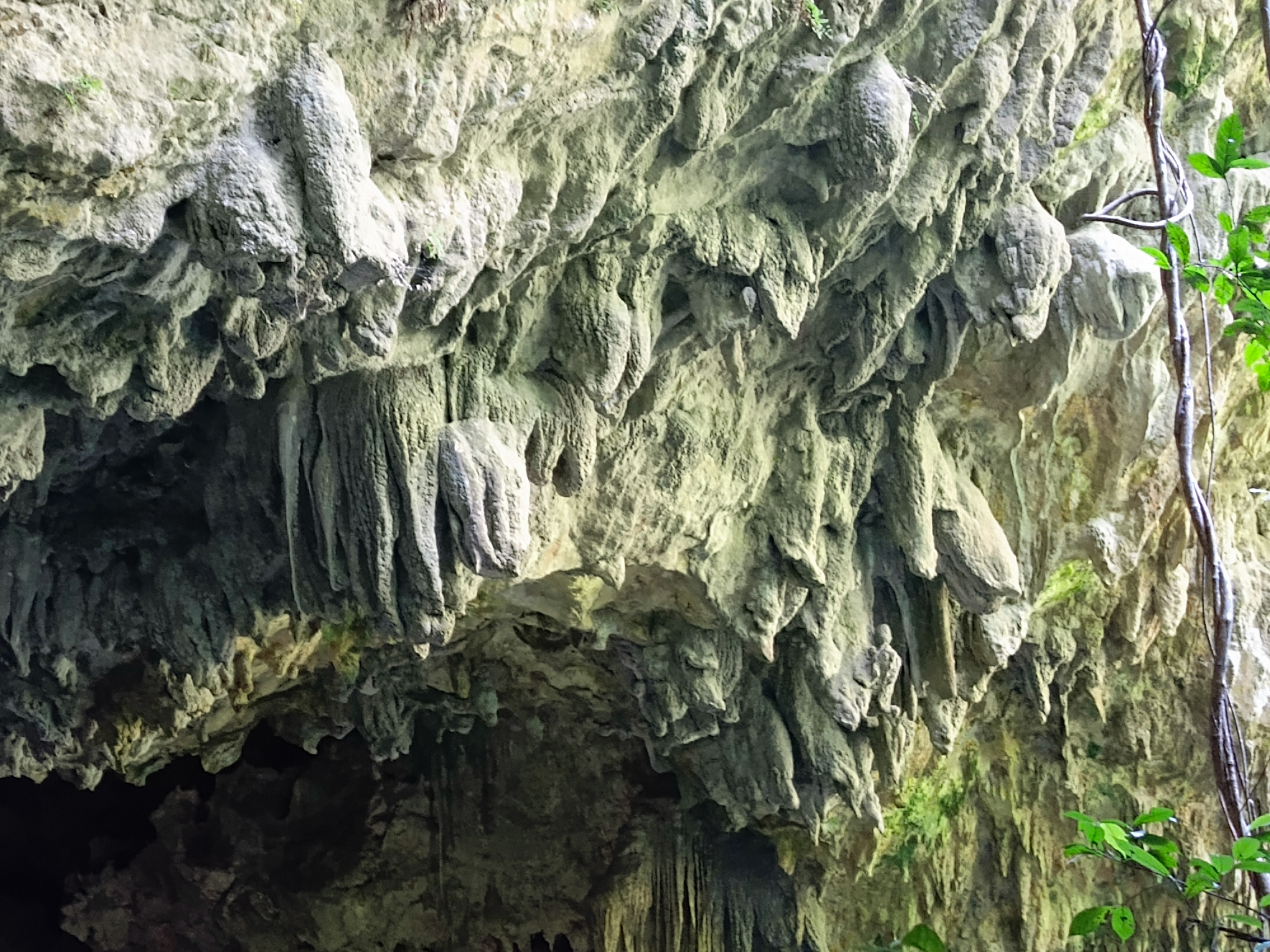
Jomblang Cave is located in the Karst region of Gunung Sewu, which geologically consists of carbonate rocks, primarily limestone. These carbonate rocks contain more than 90% carbonate material, with the main components being carbonate mud (micrite) and other carbonate grains. Stratigraphically, the rock formations composing the Gunung Sewu region, from the oldest to the youngest, are as follows:
- Wungkal-Gamping Formation: Composed of alternating layers of sandstone and siltstone.
- Kebo-Butak Formation: Consists of layered sandstone, siltstone, claystone, shale, tuff, and agglomerate.
- Semilir Formation: Composed of tuff, lapilli tuff, pumice lapilli, pumice breccia, and shale.
- Nglanggran Formation: Consists of volcanic breccia, agglomerate, tuff, and andesite-basalt lava flows, as well as andesite lava.
- Sambipitu Formation: Composed of coarse sandstone that gradually transitions into fine sandstone, interbedded with shale, siltstone, and claystone.
- Oyo Formation: Consists of tuff and tuffaceous marl.
- Wonosari Formation: Dominated by carbonate rocks, primarily bedded limestone and reef limestone.
- Kepek Formation: Composed of marl and bedded limestone.
- Surface Deposits Consist of unconsolidated to weakly compacted materials, ranging in grain size from clay to gravel.
Types of Vegetation in Jomblang Cave
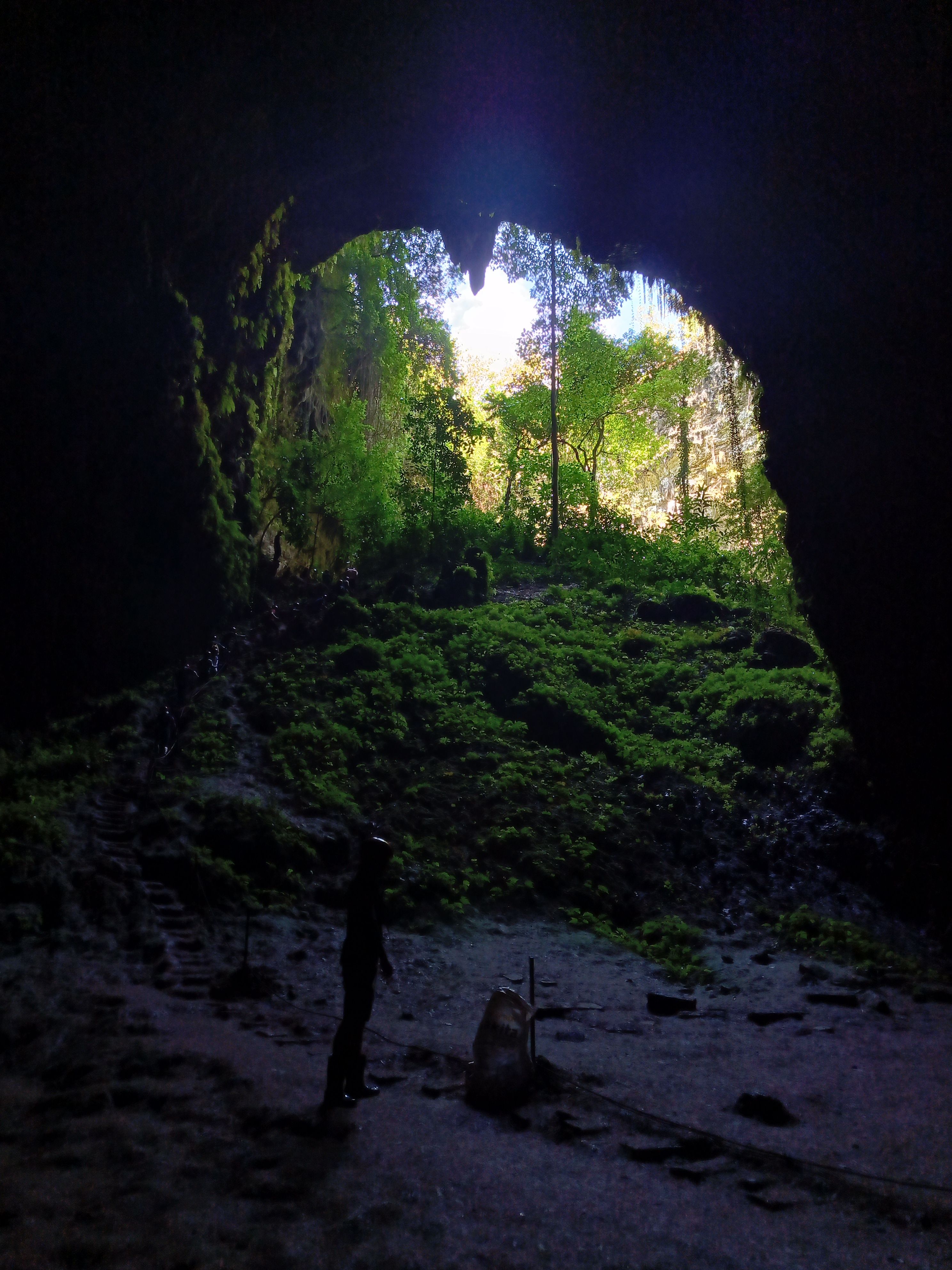
A study conducted by Muhamad Firdaus Akbar in 2015 analyzed the vegetation in Jomblang Cave and identified several dominant plant species within the cave’s forest ecosystem.
- At the seedling and understory level, Nephrolepis biserrata from the Dryopteridaceae family had the highest Importance Value Index (IVI) of 46%.
- At the pole level, Garcinia rostrata from the Clusiaceae family dominated with an IVI of 160%.
- At the sapling and tree levels, Tabernaemontana sphaerocarpa from the Apocynaceae family was the most dominant species, with IVI values of 184% and 163%, respectively.
Additionally, an article titled "Goa Jomblang, Mencari Cahaya di Perut Bumi" published by National Geographic Indonesia in 2015 describes the cave’s floor as home to a forest ecosystem distinct from the vegetation above ground. Various species of mosses, ferns, shrubs, and large trees grow densely, forming what is often referred to as a "prehistoric forest." These findings highlight the unique biodiversity within Jomblang Cave’s ecosystem, emphasizing the need for its conservation.